Grab
An exploration of a gesture-controlled photo gallery
What is Grab?
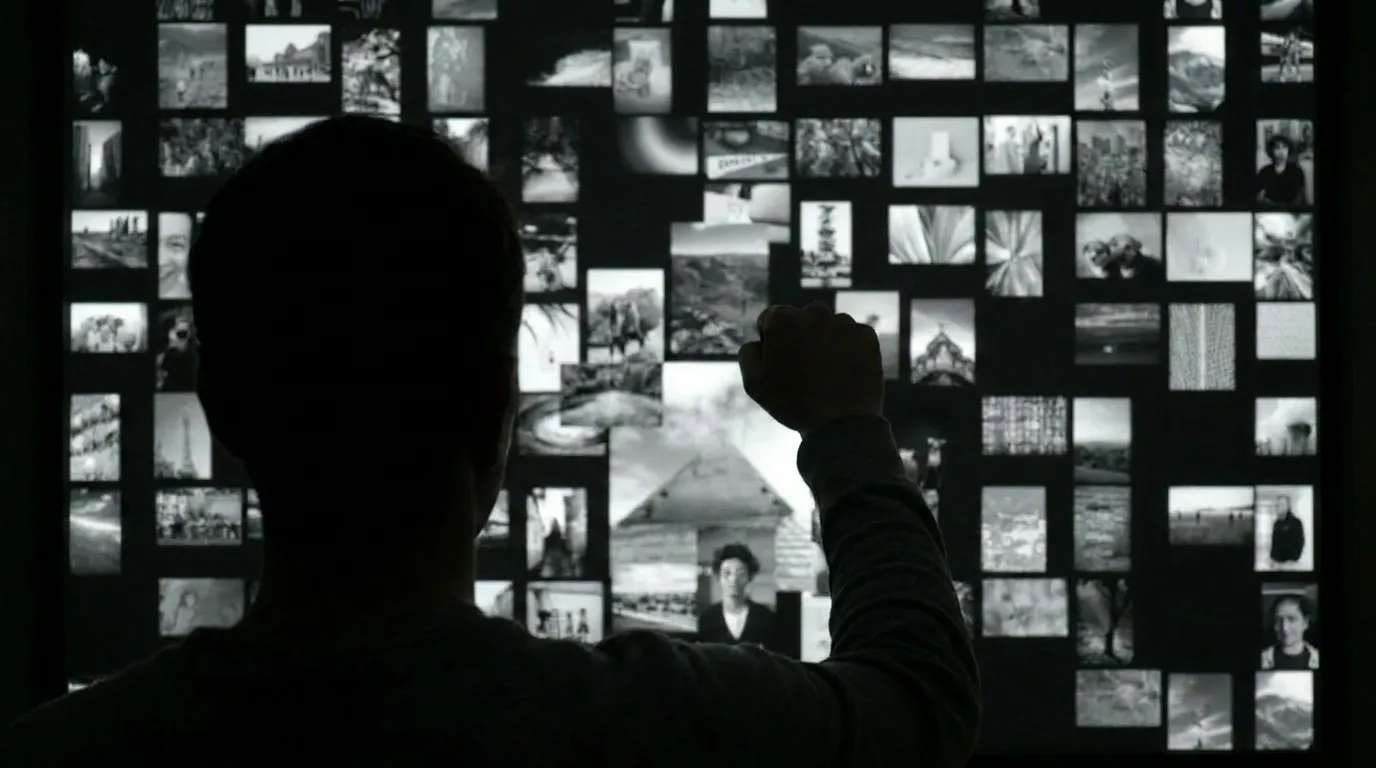
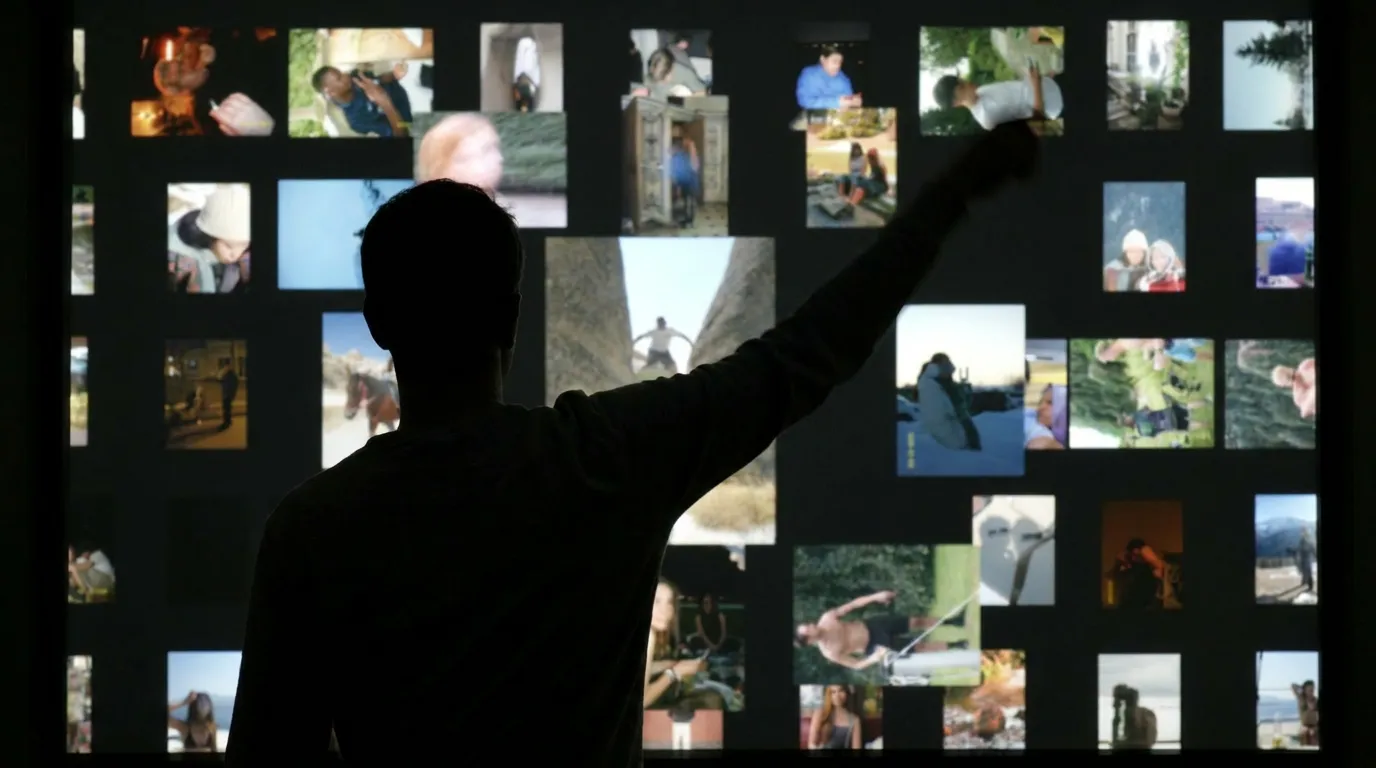
Grab is an experiment in browsing photos by moving through them rather than scrolling past them. A webcam reads your hand to move through the space, creating an experiment in gesture and discovery.
A new interaction with my photos
Every gallery looks the same
A grid, sorted newest-first, scrolled top to bottom. It is efficient and forgettable. We can intentionally retrieve a photo, but rarely rediscover one. The structure fixes the order, and the order flattens everything into a list.
Rethinking the structure
Grab starts from one provocation: what if there were no grid, no timeline, no scroll direction at all? Just an open field of images you drift across, and a way to reach into it with your hand instead of a cursor.
No scroll direction, no imposed order.
Explore through your preferred peripheral or through your body.



In touch with your memories
The whole interface is read from your webcam with no need for mouse or keys. Open hand to move, closed hand to choose, and a single dot that mirrors where your hand is on the screen.
Open palm · glide
Move your open hand and the whole field slides with it. Let go and it drifts to a stop, carrying momentum.
Closed fist · grab
Close your hand to expand the image under the dot, connecting our physicality to our decisions.

The dot · your cursor
A single point tracks your hand against the screen to provide the feedback that keeps a touchless move legible.
Webcam
A standard webcam watches your hand at thirty frames a second.
Hand tracking
Computer vision finds the palm and reads whether it is open or closed.
TouchDesigner
Hand position drives the canvas, panning, momentum and the selection dot all resolve here.
The canvas
The field of images answers instantly: glide, grab, release.
Real time pipeline
Physicality creates pause
When selection costs a gesture instead of a click, people look longer before committing. Exploration becomes more intentional and personal.
Spatial browsing removes hierarchy
Without a clear grid and chronological order there is no “first” photo. Every encounter becomes a new finding, using the inherent chaos of the structure as a changer for the emotional register.