
logitechMind
Better recovery from workplace interruptions
What is Logitech Mind?
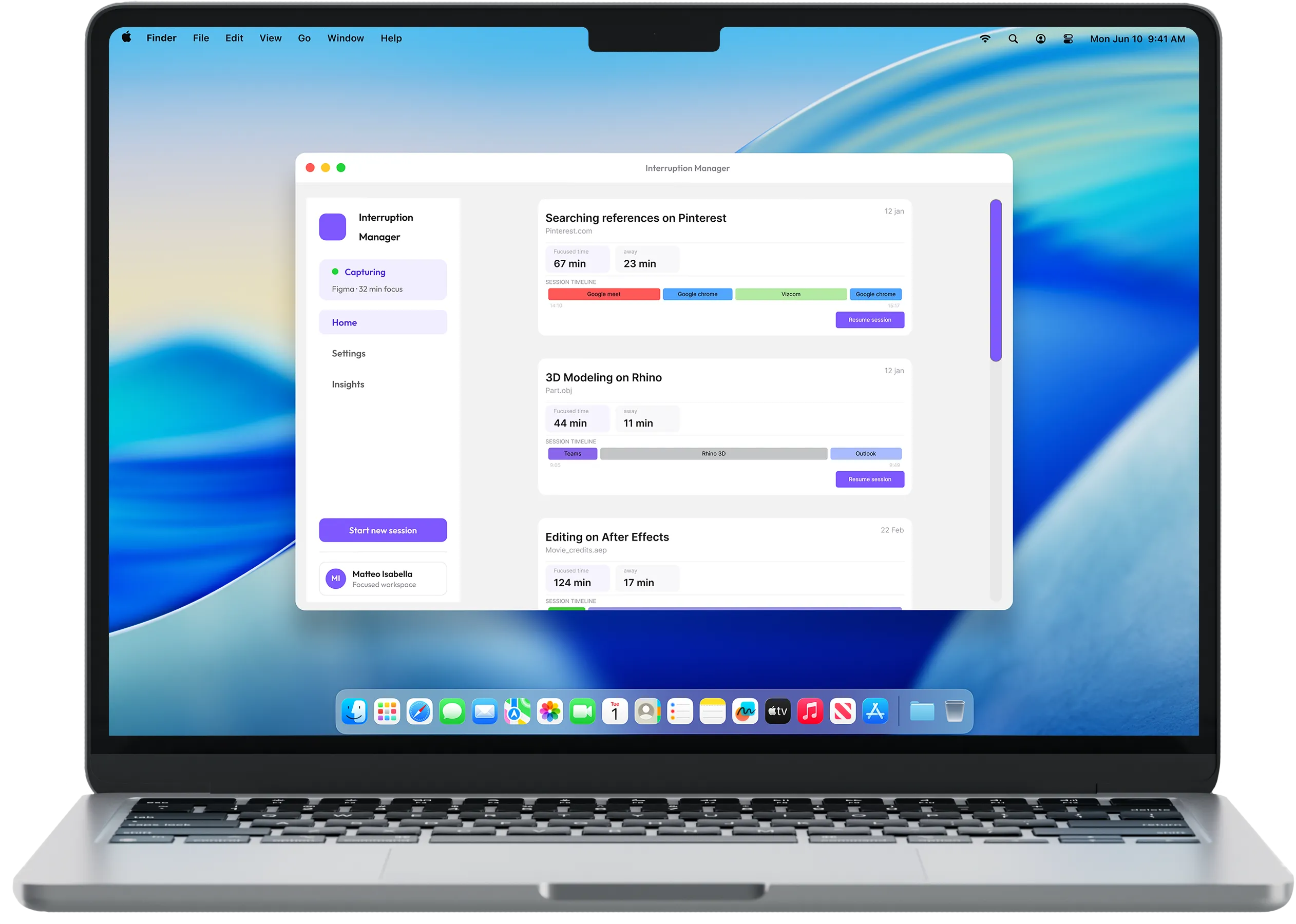
Mind is a desktop tool that helps workers recover from interruptions. One trigger captures everything you were working on, one trigger brings it all back; rebuilding your context in seconds.
Interruptions are inevitable.
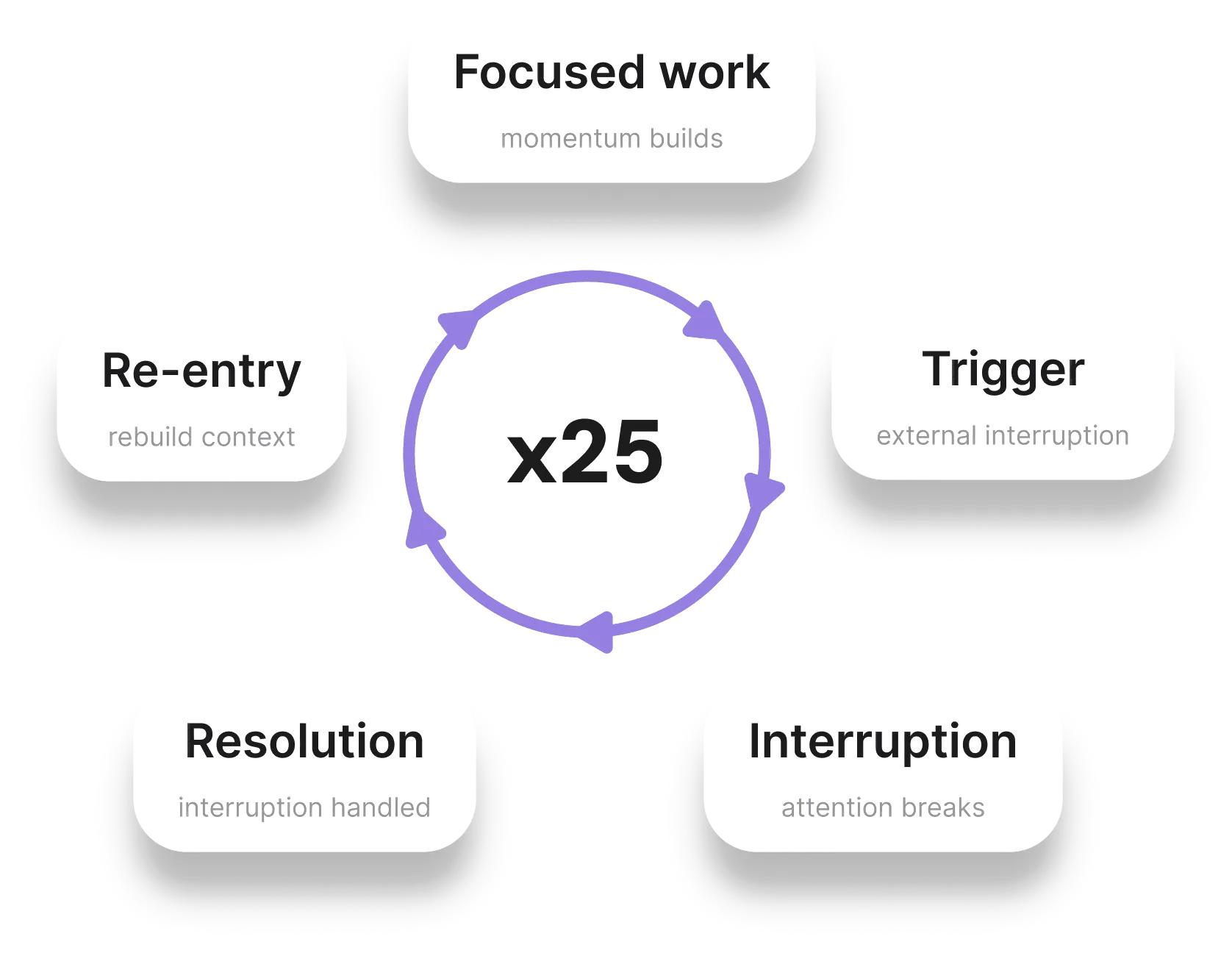
The average worker goes through 25 cycles of focus, interruption and re-entry in a single day, losing the precious momentum they had built while focusing on a task. The biggest energy cost is in the re-entry.
Working prototype
One trigger saves everything you were doing before an interruption; one trigger brings it all back.
It rebuilds your context and reminds you where you left off, so returning to work costs seconds instead of minutes.
Priority to constraints
*153 survey samples
- Speed of Interaction One trigger interaction
- Ease of resumption Welcome back card info
- Depth of detail capture Full context snapshot
- Ability to save multiple contexts Save work for later
- Control over what is saved User confirmed trigger
- Privacy and data handling locally stored information
User journey map
Deep in the task, holding a fragile mental model.
FocusedInterruption hits. They drop everything — no time to note anything.
StartledMind trying to keep track of main task; tabs and windows pile up.
TornA messy desktop, scattered windows, debris tabs.
OverwhelmedManual reconstruction: Re-reads, repositions, closes tabs.
FrustratedMomentum rebuilds slowly time and energy already lost.
DepletedSame deep focus, the tool captures context silently in the background.
Focused, secureOne quick trigger stores the full context. Nothing to write down.
Calm, in controlAttends to the interruption freely, the system watches what changes.
PresentOne trigger, and the workspace rebuilds itself. Debris cleared.
ReliefThe welcome-back card restores context at a glance.
OrientedResumes right where they left off — back in flow.
ConfidentEvaluation outcome
Window restoration vs Welcome back card
The restoration of windows is an instant memory trigger, well valued by the professionals.
The welcome back card has a high learning curve and can be confusing at first; needs more research on what data can help workers.
Ghost interface
The interface is unobtrusive, it does not distract you while you are focused on your tasks.
The interface risks lowering the user’s engagement; it needs exploration of different methods to ensure engagement while maintaining a low profile.
Gestures and hardware
Users responded well to the possibility of adapting the trigger signal to their own preference.
Full integration with Logitech’s physical products is only a theoretical application; more exploration of the specific gestures available will unlock even more customization.